
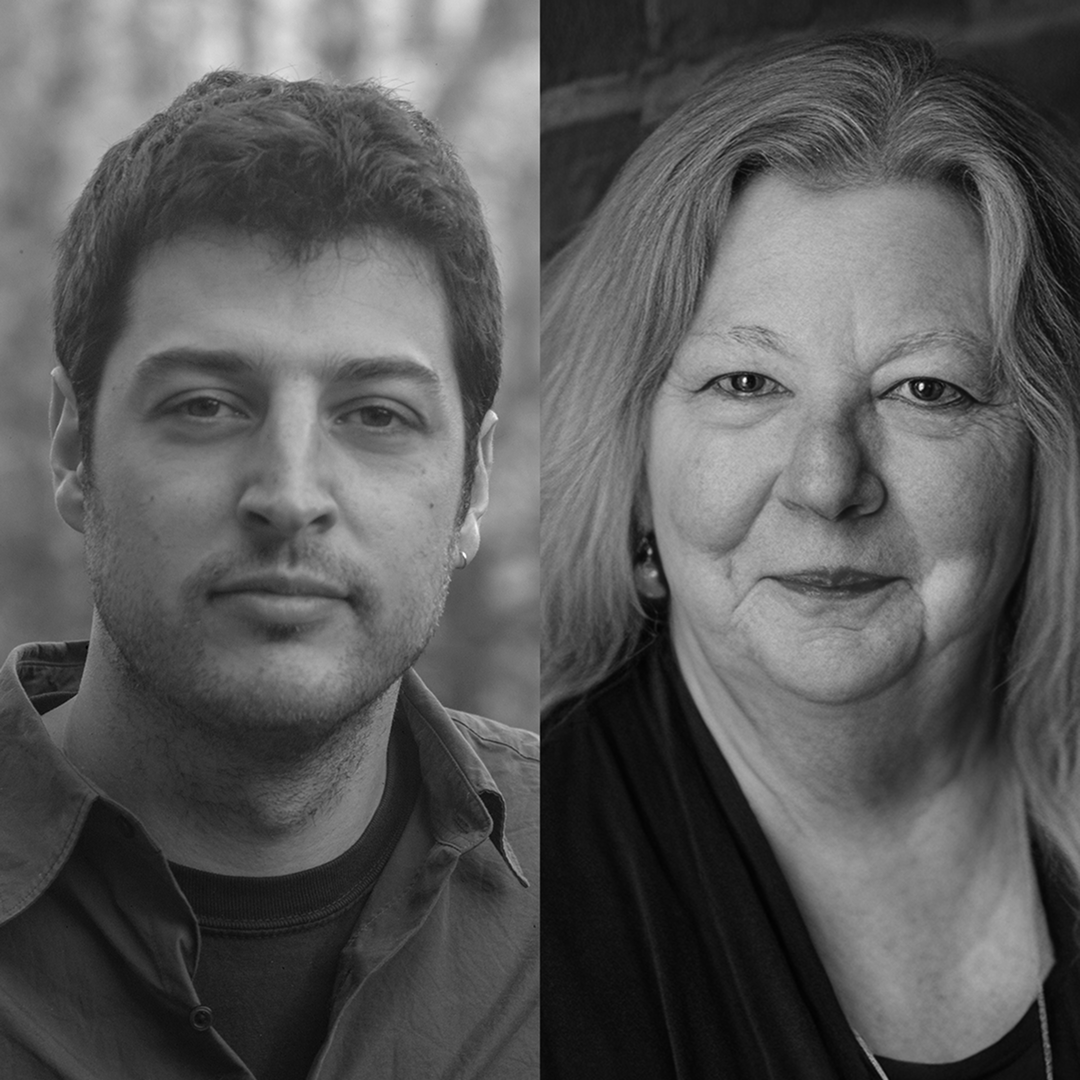
Director Adam Meeks and counselor Annette Deao join Elizabeth Vargas to discuss “Union County,” a film starring Will Poulter and Noah Centineo as brothers navigating a drug recovery court. Blending fiction with real courtroom footage and real participants playing themselves, the film offers a realistic look at addiction, community, and the daily work of recovery. Adam and Annette share stories behind the film’s most powerful scenes and why they built it as a celebration of resilience rather than tragedy.
Related Reading
Explore more on topics and themes discussed in this episode:

 Learn More


Episode Transcript
Elizabeth Vargas:
Adam Meeks, Annette Deao, thank you so much for joining us on Heart of the Matter, and congratulations on this incredible movie. It’s so powerful. I really encourage everyone to watch it.
Adam, tell me how you got the idea for this movie because as a journalist, over many decades, I have spent so much time in so many courtrooms and I have never been ever in a courtroom like the drug court that you are depicting in this movie.
Adam Meeks:
I had felt the same way and had that same realization when I first sat in on this particular program. I’m from this general area, Central Ohio, from Columbus originally. Union County is one county over. And I had been introduced to the previous drug court judge in Annette’s program back in 2018. And that judge invited me to sit in on a meeting. I had been asking him a lot of questions, and I think at the time I was wanting to understand exactly the way that the opioid epidemic was affecting my community and this place that I’m from. And I started hearing about these drug courts, and I was connected with the judge, I asked him a lot of questions. He invited me to sit in on the meeting.
And when I sat in on that first meeting, I had that exact realization that you just articulated, which is like I’ve never seen or felt this kind of environment before, this kind of compassion and empathy and humanity that is so rooted in this community that’s showing up for people who need people to show up for them. And yeah, it just had a profound impact on me. And I almost immediately felt like if I could share via a camera, if I could share what it feels like to be in this space, that I think could be hopefully a meaningful addition to the cultural conversation around addiction and recovery and present other paths forward and possibilities for people who need to see possibilities. And then I met Annette shortly thereafter, and we became fast friends, and this has sort of been a shared collaborative project for almost eight years now.
Elizabeth Vargas:
Annette, you’re not just an actress in this movie, you are actually a drug therapist counselor. You work in this drug court. Is it really the way it’s depicted in this movie where a judge is asking these people who are there, “How are you?.”
Annette Deao:
Yes. It’s actually like that.
Elizabeth Vargas:
“Where are you living? Do you need anything?” I mean, the compassion was off the charts. And by the way, something that probably most of those people aren’t getting everywhere else in their life.
Annette Deao:
Elizabeth, you’re so right. This is a model that’s actually been around for quite a while, and it’s amazing that there hasn’t really been more out in the public about it, but that is a very real depiction. I mean, those were real court hearings. It happens every Monday just like that. People come, “I don’t have gas to get to my treatment.” We give them a gas card. “I lost my job.” “Okay, what do you need?” Or, “I just got a new job, and they require me to have steel-toed boots.” I’m on a first-name basis with the shoe store.
So it’s all these little things that come together to help them rebuild their lives and live their best life. We’re not here to tell them what that needs to look like, but we’re here to help support them and help them build those recovery blocks that they need to get themself out of the situation that they’re in.
Elizabeth Vargas:
Adam, you have two incredible actors in this movie, and they’re showing up at court. But what’s really remarkable is that so many of the other people we see talking to the judge are real people who are actually really going through this, are right in the middle of that slog of recovery.
Adam Meeks:
Yeah. Pretty quickly, I realized when I started thinking about a film in this community, in this context, that the most authentic and dignifying way of making a portrait of this community would be to invite the community to participate in the telling of the story. And I started to feel really compelled by this idea of creating these little portraits of folks stepping up to the podium and representing themselves. And what’s exciting then about that is in a filmmaking context, a courtroom is a inherently performative space. It’s a stage. You’re stepping up and you’re representing yourself or you’re performing a version of yourself in front of other people, in front of the judge, in front of the team and other participants.
And so I thought it’s an organic place for actors to coexist with people who are not acting a script, but are still acting a version of themselves for the judge and, in this case, also for the cameras. And so it became this really exciting, very rich place for us to let those kind of barriers or dividing lines that we think about between fiction and nonfiction sort of dissolve to invite folks to tell their own stories and represent themselves.
And so we filmed those in real Monday afternoon meetings, and Will Poulter and Noah Centineo were in character for 90 minutes during that meeting, and they didn’t know when they were going to be called up by the judge. They and the judge and myself knew the sort of shape of the dramatic scene that the movie needed of them as the actors. So they would step up, and the judge would initiate that fictional scene, and then he would dismiss them and another person would step up and have their real interaction in the meeting on that Monday.
Elizabeth Vargas:
And this is a real judge?
Adam Meeks:
This is a real judge as well, yeah.
Elizabeth Vargas:
And he really like this? He’s really that kind?
Adam Meeks:
Oh, yeah. Everything that you see in the movie between him and participants of the program is entirely a documentary. And really everything that is also fictionalized in a certain way between the judge and between Will and Noah’s characters is also very rooted in transcripts from my research and recordings being in the room over the years. It’s all exactly as represented. It’s a special place and community feeling that we wanted to share.
And then it was important, too, that it was always voluntary for the participants. So every Monday we would say, “Raise your hand if you don’t want to be filmed today.”
Elizabeth Vargas:
How many people said they don’t want to be filmed? Was it half?
Adam Meeks:
No.
Elizabeth Vargas:
I mean, I’m curious.
Adam Meeks:
Two or three.
Elizabeth Vargas:
Out of how many?
Adam Meeks:
Out of…
Annette Deao:
20.
Adam Meeks:
20. Yeah.
Elizabeth Vargas:
Wow. So people were really willing to share?
Annette Deao:
Oh, yeah.
Adam Meeks:
I think Annette does this amazing job of instilling comfort and trust and compassion in this space. And I think Annette really leads the charge in sort of setting that tone. And Annette has so believed in this project and what we were setting out to do together, and people trust her. So I think folks understood that we were there to celebrate this experience and their achievements and their process.
And also, there’s a sentiment that I heard a lot and we experienced a lot as the filmmakers making this where folks would say, “If my story can help anybody else, then it’s worth sharing.” And I think that’s a sentiment that is expressed a lot in the recovery community. There’s so much generosity, and I hope that the audience can feel that sort of generosity of spirit from the community in the film.
Elizabeth Vargas:
Yeah. Well, I think the reason you hear that so much in the recovery community is because everybody who’s in recovery knows they got there because somebody else helped them.
Adam Meeks:
Yeah, exactly.
Elizabeth Vargas:
Without giving away anything in the movie, Annette there is a particularly powerful scene where a character calls you at night because they’re about to use. A terrible thing has happened, and they’re this close to picking up again. And you get on the phone–it just makes me so emotionally even thinking about this scene–but you say, “I’m not going anywhere. I’m here as long as you need me.” That was an extraordinary scene.
Annette Deao:
And that is a true story. It has happened in my career more than once. And it’s not often that I give out my home cell phone number, but when I’ve got someone that’s really struggling and I think they may need an extra lifeline, if you will, and we always encourage them to have five, 10 people deep on their phone calls they can call. That way if somebody doesn’t answer, maybe the next one will.
Elizabeth Vargas:
Yeah. I was screaming at the screen, “Call your sponsor,” before realizing this character doesn’t have a sponsor yet, but that’s why-
Annette Deao:
It may not. Or maybe that person didn’t hear the phone call, or their phone bill wasn’t paid. I mean, there’s all these what-ifs. And so if I end up being the one that gets the ring, then I’m going to pick up the phone, and I’m going to be there, and I’m going to be present and try to talk them off that cliff or just be there and be present. Sometimes just being that benevolent witness to whatever is going on with someone, it’s all they need to get past that moment of I’m going to do it again or whatever it might be. So yes, it was a very powerful scene to do, and it is something that I’ve repeated several times in my career, yes.
Elizabeth Vargas:
One of the things that the movie is… I think probably the reason it’s so powerful is in a very quiet way, but in one of the most authentic ways I think I’ve ever seen, it shows what that journey of recovery is like. It’s not glamorous. It certainly isn’t easy. We watch characters have to get on buses and live out of cars at a certain point and get up and brush their teeth in the morning with a bottle pouring water on their toothbrush and as they stand outside in a field where they’ve just slept in the backseat of their car. It really shows what people are up against. And not in a way like, “Oh, my God, it’s too much,” but just respect, respect that these are people who’ve hit rock bottom and trying to get sober and how in the daily minutia of life, how difficult that is.
Annette Deao:
Their stories are incredible. People are so resilient. And I think when they’re really struggling like this, living out of their car or couch-surfing or asking for money to have food, those kind of things, we just want to meet them right where they’re at and say, “How can we help you with these daily things until you can see into maybe the day after tomorrow?” It is literally for them and for us working in this kind of docket, a day-by-day situation for many of them.
Elizabeth Vargas:
Adam, how did you make the decision to depict that? Because we’ve done a lot of documentaries and a lot of reporting on the opioid crisis and big pharma’s role in it and rehabs and how many of them are corrupt and sober houses are in cahoots. I mean, I’ve done so much reporting on all this. This is something we haven’t actually shown. It’s just the day in, day out, every moment you’re making a choice not to pick up.
Adam Meeks:
Yeah, I think that around the time that I first started experiencing the drug court community, I was very aware of how, exactly what you’re saying, the kind of tragedies of the epidemic and a certain kind of narrative of devastation had been told over and over and over and over again. And it deserved to be talked about because it was very real, and people were dying, and it’s devastating.
At the same time, if we only define a group of people, a place, a community, a subject matter by its tragedy and by its devastation, then it can never transcend that. There’s no room for growth or for a new path forward if we don’t observe it and see it and share what that path forward can be. And so that’s a harder… It’s a less dramatically compelling, on-paper story to tell is one of somebody getting back on their feet. It’s not the kind of shape of a story that people typically go to or are used to taking in when they watch or read stories.
But I think when you actually get past that first line of thinking and pay attention and look at this day-to-day experience, you see exactly the same thing, which is challenges and obstacles and setbacks or achievements and triumphs. It’s exactly the same thing. It’s just that we’re seeing the way my characters, who I see as heroes in this movie, are overcoming these obstacles that are in their way.
And I think what’s really powerful is to recognize the heroes in our daily lives and how if we can ground this as much as possible in the reality of it and go, “Oof, that is really hard and uncomfortable to figure out how to show up to this facility, to pee with a door open with the parole officer staring at you, watching you, to feel the shame in these spaces, to have to ask for help in uncomfortable ways, to constantly be feeling uncomfortable in your own body and figuring out how to feel better.” All of these things are so hard on a sort of individual human level.
And I think to see the way folks then transcend these setbacks and limitations and achieve a new version of themselves or reach a different place in their lives, that is the most heroic journey I can think of in our lives. And so I think that it just came from starting to see that and recognize that in this space and program, and that Annette facilitates and just think, “How can I pull the camera up to that and see it as a celebration?”
Elizabeth Vargas:
Yeah, it brings to life in a very powerful way the challenges of walking this road to recovery, how hard it can be. And yet you see these people choosing that, and it gives hope to, I think, to anyone who knows somebody who you better understand what they’re going through and can celebrate what has happened.
You’re from that area, Annette you live in that area. I was very struck by your depiction of, this might be Central Ohio, but there are a lot of places in United States of America right now that look like this community, towns that have fallen on hard times, people who are struggling to find a job that pays well, that can pay the bills.
There’s one line from one character when they’re talking about maybe moving to Columbus, a bigger city in Ohio, and this character says, “Yes, but if we leave, who will be here for those who are left?” And I remember thinking that is so true of so many towns across America that where we have a lot of Americans who are struggling and maybe turning… And what’s moved in and doing great business is big pharma in the form of painkillers.
Adam Meeks:
Yeah. That line that you just mentioned is a line that I’ve heard Annette say many times. And at a certain point I realized, I think that’s an important sentiment to include in this movie, and it sort of found its place in that scene. If there’s ever any questions of the extent of Annette’s impact on this movie, you can basically attribute any choice or any moment back to Annette in some way or another in the movie.
Annette Deao:
He’s so kind to me.
Adam Meeks:
But yeah, and I think what you’re saying is one of many reasons why I and we had such conviction around the potential impact and meaningfulness of making this movie and sharing it, and the hopes that it could resonate was that fact that while this is an extremely specific movie about specific group of people in place and program, it’s also, I think, fairly universal through its specificity.
And that’s sort of why I landed on the title of Union County also, which is that there are Union Counties in a lot of states in this country. Obviously, it’s also a movie about communities and finding and forming unions between people, but it’s also when you talk about the state of the union or the striving for a more perfect union, I think it’s suggestive of just one battle that this country is up against and has been for a while. And I hope that it can feel both very specific to and as a love letter to this place that I’m from, but also can resonate with folks across the country who recognize themselves in these characters or their hometown in this town.
Elizabeth Vargas:
So Annette, explain the drug court to me and our audience. Who’s eligible? Who are these people? Have they committed a crime, a petty crime? How do they land in drug court?
Annette Deao:
So the model is called a specialized docket or a problem-solving court. There are more than 4,000 across the United States, and they are used for all kinds of issues: mental health, human trafficking, the veterans courts, juvenile courts. So they even use them in family dependency cases with Children’s Services, which is really how I got started in this.
In our particular docket that you’re seeing here in the film, this is what’s called an adult recovery court, and everyone who’s in the docket has committed a felony. Many of them have been in jail for periods of time. We only take people who are high risk and have a high need, meaning they need help with housing, jobs, medical, dental, all those kinds of things. They’re peer groups.
Elizabeth Vargas:
High risk for what?
Annette Deao:
High risk for re-offending.
Elizabeth Vargas:
Okay.
Annette Deao:
Yeah, high risk for re-offending or continuing to use. So we take the higher risk because lots of times they would’ve had a failed attempt at other kinds of treatment. So they have to agree to come into the court. It’s actually a voluntary thing.
Now, it would be a lot easier for them to probably go off to prison or jail because they wouldn’t have to do any of this, but they have a desire. There’s something inside of them that says, “I can do better.”
There’s also a sales pitch I give, because I want to go in and encourage them. I’m calling it a sales pitch, but I want to go in and say, “Where do you want to be? What do you want to do? And what if this court can help you get there and all the community people who are involved in it from the treatment agency to the Department of Job and Family Services to, again, the shoe store person, what if they were all there behind you and all you’ve got to do is go to treatment and come to court and follow the rules?” “Hmm, maybe I could do that.” We have a 50%… Actually, right now our rate’s about 54% success rate.
Elizabeth Vargas:
That’s what my next question was, a 54% success rate at them getting sober?
Annette Deao:
At them completing the program. And to complete the program, you have to have sobriety, you have to have stable housing, it’s some kind of income. It could be that they had a disability, and we help them get their disability, cut through the red tape a little bit, if you will. Whatever it’s going to take for them to live their best life. Again, not what we think that should look like for them. Everybody’s different. Everyone has special desires. We have programs that we can send them to where they learn a trade. We have a gentleman who learned plumbing or someone who learned HVAC.
And every one of these courts is ran by a judge, and they have a person like me and a group of people who we call a treatment team who include treatment providers and case managers and peer support people and all kinds of programs. In Ohio, we have 250 or more of these dockets just in our state.
Elizabeth Vargas:
I’ve heard that funding has been cut to some of these drug courts.
Annette Deao:
Yes. Funding is absolutely in jeopardy all over the place. We currently, in our drug court, have a federal grant. It’ll be done in two years. We have no idea what we’re going to do after that. We’re already looking for other funds, but to keep it going, you do have to be able to provide these ancillary services. And thank goodness the community steps up to the plate and our local mental health boards help and whoever can, but funding is necessary to help get people back on their feet.
And we don’t just throw money at them, we make sure they have a place to live. Sober living is huge, good sober living and good treatment. Some of them require residential treatment where they stay there for a month or so. Others can do it in their own community, which is what we really like. We want them to get sober in the community that they’re going to live in so we can help them deal with the issues that are around them.
Elizabeth Vargas:
Adam, is part of the motivation for doing this movie and shining a light on this drug court system with a more than 50% success rate to help perhaps lead to more funding so that these programs don’t close down?
Adam Meeks:
I mean, if that’s an outcome that would come out of this, that would be incredible. And I think that there’s so much value in celebrating and, exactly as you said, shining a light on this program and how it works. I would say largely because of what Annette just said, a 54% success rate is profound, especially when you compare it to short-term rehabs and jail time and stuff, which, Annette, correct me if I’m wrong, but I think those numbers rarely get into double figures, like 10%.
Annette Deao:
Exactly. Right.
Elizabeth Vargas:
It’s incredible.
Adam Meeks:
To be at 54 is like, wow, this is exemplary. This is something that can help hopefully demonstrate not just a specific program and group of people, but values and ways of treating people and ways of thinking about addiction and recovery that I think hopefully by looking past some of these stigmas and some of these outdated models of treatment and care, it can compel people to go about things differently, whether that’s helping with funding for some of these programs, which we hope will happen, or it’s other treatment programs learning about how this one works or whether it’s other communities being inspired by it or even just a person seeing the movie and being like, “Oh, look at this person carving out a path forward. Maybe that’s something that I could do too.”
I think there’s just so much I hope that folks can glean from this movie, both as a kind of exemplary program and institution and also just on a human level. And the hope was that by telling just a human, character-driven story without a political agenda, but just about people treating each other with compassion and dignity in a program, I should say, too, that has bipartisan support, which is, in 2026 in America, profound and rare.
Elizabeth Vargas:
Maybe the only one.
Adam Meeks:
Maybe the only one. So my hope is that by truly just pointing a camera at it and saying, “This is worthy of us taking a look at,” hopefully there are some takeaways.
Elizabeth Vargas:
I loved the graduation scene when you could… And it’s not even at the end of the movie, it’s like in the middle. But you see these people who have managed to get through, is it three levels, Annette?
Annette Deao:
Yes.
Elizabeth Vargas:
All three levels, which takes how many months?
Annette Deao:
Normally about 18.
Elizabeth Vargas:
18 months they have put their lives back together. It’s not glamorous. It might not look like it’s… There was one woman you have who’s talking about how she applied for a job at TJ Maxx and hopes she gets it, but she might not pass the background check. And all I could think of was, “Dear God, please give her a chance at this job,” because you root for them so much.
Adam Meeks:
She has a job now, and she graduated from the program in the spring.
Elizabeth Vargas:
Oh, my God.
Adam Meeks:
Yeah.
Elizabeth Vargas:
Fantastic.
Adam Meeks:
Yeah. And that graduation in the movie was a real graduation that we filmed in the same way we were filming…
Elizabeth Vargas:
Real people.
Adam Meeks:
… the drug court meeting. Not only are the real people, but the actual graduation for those folks. And Annette helped facilitate an opportunity for us to film it with our actors in the mix as well.
Annette says this very eloquently. She says, “We film the sequel to this movie or we do the sequel to this movie every Monday.” And that is true. What you see in the movie is truly happening on a daily and weekly basis in this program and in this community.
Elizabeth Vargas:
There was one other scene I wanted to ask you about because the Partnership to End Addiction helps families who have somebody who is struggling. And it’s the scene where Cody goes to his sister to make an amends, to apologize, awkwardly as it might be for him and his character, because it’s not a fulsome apology. It’s just, “I’m sorry,” but it’s the first time he’s ever said that or recognized that he needs to say that. And I kept waiting for her to say thank you or acknowledge it. And probably in a very accurate depiction, Adam, you didn’t have her do that. She was angry, and I don’t know that she ever forgives him, especially given the arc of the story.
Adam Meeks:
I think certainly not that easily or that quickly. I think a lot about the years, often decades of pain and hardship that’s inflicted on families and that families are going through in this process. And I think about how many times he may have apologized to her before too, and it’s going to take a lot longer, a lot more than a first apology for her to say, “Great, I trust you, and it’s all good, and we can move forward together.”
At the same time, I think that there is a profound sincerity in that gesture and that apology from Cody. And I take him very seriously and believe in the sincerity of it as a sort of first step. But I think for his sister, it’s going to take more than that and more time than that. The proof is to walk the walk and not just talk the talk one night. And I think that that is something that I experienced a lot and learned a lot about when talking to folks.
And it is important to me also that for somebody to really start to get back on their feet in recovery, they ultimately have to do it for themselves, not for someone else. And I think if you think you can do it for your sister and then your sister doesn’t offer you forgiveness, that’s the first step in being like, “Okay, am I still going to put one foot in front of the other and keep doing this for me?” For me, it’s another moment of small triumph for him is to say, “Okay, I’m going to leave this moment, this really painful moment that doesn’t give me the perfect closure that I need and keep walking forward.”
Elizabeth Vargas:
Adam, it’s an extraordinary movie. Annette, you do extraordinary work day in and day out in that drug court system. And by the way, you’re amazing in this movie. I couldn’t tell who was a real actor and who was a person just… You so seamlessly… I mean, I’ve never seen anything where you can’t tell. I usually can tell, but your actors are that good and the people in the community of this town in Ohio are that authentic that it’s incredible.
The movie is Union County. It got a standing ovation at the Sundance Film Festival, and for good reason. I encourage everybody to watch it. Adam, Annette, thank you both so much for joining us.
Annette Deao:
Thank you so much, Elizabeth.
Adam Meeks:
Thank you, Elizabeth. Really appreciate it.
